
The Ultimate Guide to 3C Curls: Care, Styling & Product Essentials
If you’re one of the lucky ones with 3c curls, you know how gorgeous and full of life they can be. But you also know the unique challenges that come with caring for them. From defining curls to minimizing frizz, achieving the perfect 3c curl can be a journey. This article will clear up common misconceptions and provide you with the essential information you need to bring out the best in your 3c curls.
Understanding Your 3C Curls: Characteristics & Identification
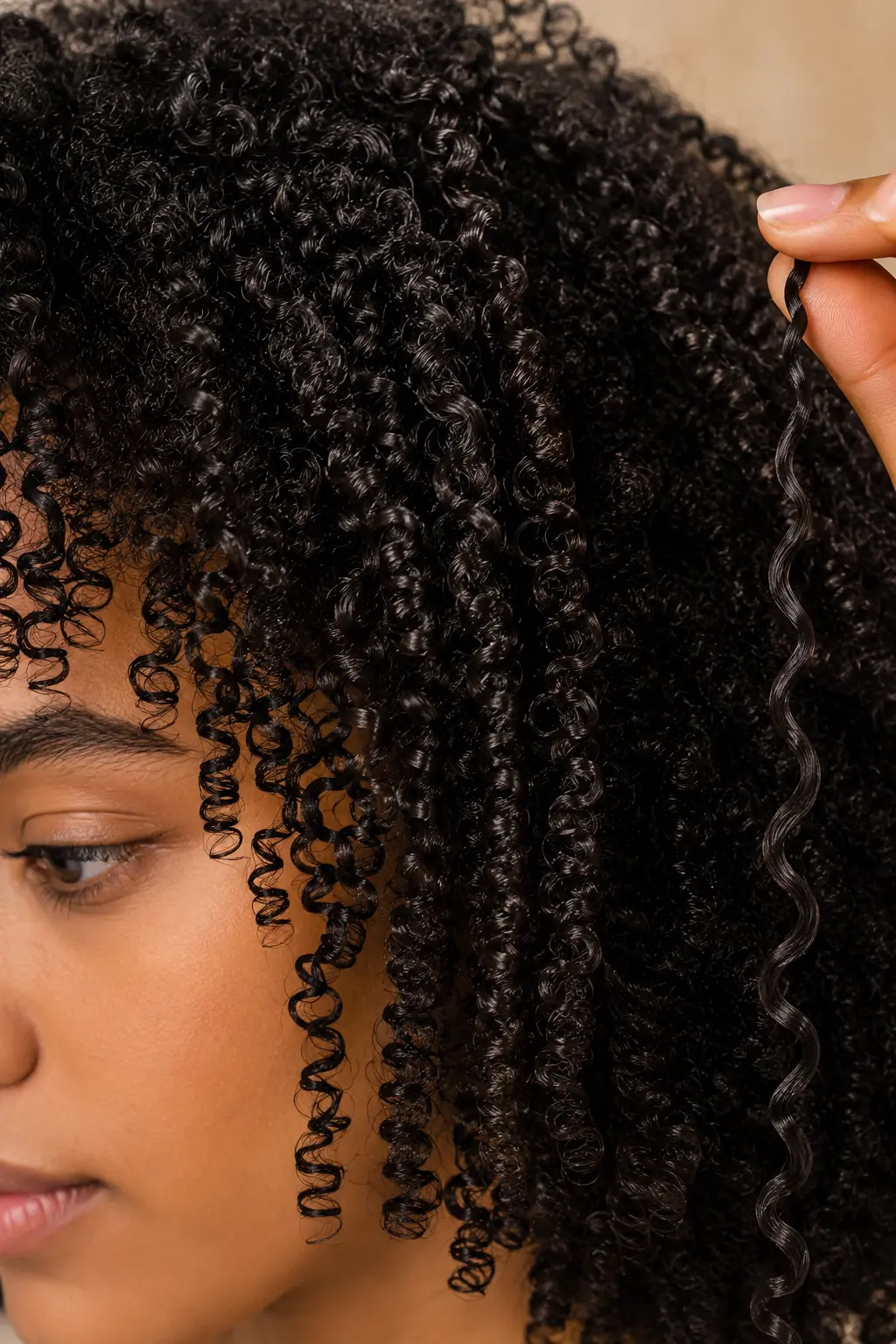
3C curls have a distinct tight, corkscrew pattern. This pattern is typically uniform, with a circumference similar to a pencil or straw.
To identify 3C hair, look for a sharp, defined “S” shape, with no visible zigzag or loose wave pattern. The texture is dense and tightly coiled, with a lot of shrinkage.
When stretched, 3C curls can appear longer, but they quickly spring back into their tight formation. In contrast to 3B curls, which have a looser, more relaxed pattern, 3C curls are more compact and tightly wound.
Differentiating 3C from 4A curls can be tricky, but 4A curls tend to have a slightly looser texture and a more fragile, delicate pattern.
Visual cues like tightly coiled roots and a lot of definition at the hairline can help confirm 3C hair. The key to accurate identification is examining the curl pattern and texture up close.
Common Challenges & Solutions for 3C Hair
3c curls have a unique structure that makes them prone to frizz, especially in humid environments. This happens because the cuticle layer is lifted, allowing moisture to pass through and causing the hair to swell. As a result, the curls lose definition and become frizzy. On a daily basis, this means dealing with a halo of frizz around your face and a lack of curl clarity.
The structure of 3c curls also leads to extreme shrinkage, which can make the hair appear shorter than it actually is. This occurs because the curls are tightly coiled, causing them to contract and shrink up the hair shaft. Dryness is another common issue, as the tight curl pattern can make it difficult for moisture to penetrate the hair. When you combine these challenges, you get hair that’s brittle, lacks luster, and is prone to tangling.
Tangling is a major issue for 3c curls, especially when they’re dry. The tight curls can easily mat and knot, making detangling a painful process. When you’re trying to comb out tangles, it feels like the hair is fighting back, and it’s easy to end up with breakage or a head full of knots. This is why it’s essential to use the right products and techniques to keep 3c curls moisturized and defined.
The Ultimate 3C Curl Wash Day Routine
For 3c curls, wash day is crucial. Start with a pre-poo treatment to soften your hair and reduce tangles. Apply a generous amount of product to your hair, focusing on the ends, which tend to be the driest. Leave it on for at least 30 minutes to allow for deep penetration.
When it’s time to cleanse, use a sulfate-free shampoo to preserve your hair’s natural oils. Use warm water, as hot water can strip your hair of its moisture. Massage your scalp gently to avoid tangling your hair further.
Conditioning is essential for 3c curls. Use a deep conditioning treatment to lock in moisture and define curls. Leave the conditioner on for at least 15 minutes before rinsing with cool water.
Detangling is a critical step where breakage can occur if not done correctly. Use a wide-tooth comb or your fingers to detangle in the shower, starting from the ends and working your way up. Be gentle, as rough handling can lead to breakage. Improper detangling techniques can damage your hair, which is why it’s vital to take your time and be patient.
Product Essentials for Thriving 3C Curls
For 3c curls, a gentle cleanser is essential to maintain moisture balance. Look for sulfate-free formulas that incorporate humectants like honey or glycerin to attract and retain moisture.
Conditioners should be rich and creamy, with emollients like shea butter or argan oil to help lock in moisture and reduce frizz. Leave-in conditioners or moisturizers are also crucial, providing an extra layer of hydration and helping to detangle curls.
Curl creams and gels are styling staples for 3c hair, helping to define curls and reduce frizz. When choosing a curl cream, opt for one with a blend of humectants and emollients to provide long-lasting moisture and definition.
Gels should be lightweight and non-greasy, with ingredients like aloe vera or green tea to help soothe and calm the hair. Oils like coconut or jojoba oil can be used to seal in moisture and add shine to curls.
When selecting products, be mindful of ingredients to avoid, such as drying alcohols and heavy silicones, which can strip the hair of its natural oils and cause buildup.
Instead, look for products with natural ingredients and a pH level close to that of the hair, to minimize irritation and promote healthy curl growth.
Styling Techniques to Define & Enhance 3C Curls
Wash-and-go is a popular method, but it requires the right product combination to prevent frizz and enhance definition.
Start by applying a generous amount of leave-in conditioner, followed by a curl activator to help define curls. Then, seal with a moisturizing cream to lock in moisture and reduce shrinkage.
Twist-outs and braid-outs are also great for 3c curls, as they help to elongate the hair and reduce frizz. To achieve a twist-out, divide your hair into sections and apply a curl cream or butter to each section. Twist the hair away from your face, and let it dry overnight. In the morning, gently untwist the hair to reveal defined, bouncy curls.
The key to achieving great results with these techniques is to experiment with different product combinations and application methods. For example, using a curl refresher spray can help to revive and redefine curls on day two or three.
Similarly, applying a styling gel to the roots can help to add moisture and definition to the hair. By trying out different products and techniques, you can find what works best for your unique curl pattern and achieve the beautiful, defined curls you want.
Maintaining 3C Curls Between Wash Days
To keep 3c curls looking their best between wash days, it’s all about preserving definition and protecting your hair. The pineapple technique is a great way to do this, as it involves gathering your curls into a loose, high ponytail before bed.
This helps prevent frizz and minimizes tangling, which can cause breakage. Using a satin bonnet or pillowcase is also essential, as these materials reduce friction and allow your curls to glide smoothly, retaining moisture and definition.
Refreshing sprays can be a lifesaver on day two or three of a style. They help revive curls and add moisture, leaving your hair feeling soft and looking vibrant. When your curls start to lose definition and look a bit dull, it’s time for a refresh.
You’ll know your curls need a refresh when they start to frizz and lose their natural texture. By incorporating these simple techniques into your routine, you can extend the life of your style and keep your 3c curls looking healthy and full of life. This can add an extra day or two to your style, making it well worth the little bit of extra effort.
Debunking Common 3C Curl Myths & Misconceptions
3c curls are often misunderstood, leading to damaging hair care routines. Excessive heat is not necessary to achieve defined curls. In fact, it can cause irreparable damage to the hair shaft. Daily washing is another misconception, as it strips the hair of its natural oils, leading to dryness and breakage.
Oils are not a one-size-fits-all solution for 3c curls. Some oils can weigh the hair down or clog the pores, causing more harm than good. Trimming hair does not make it grow faster, it simply removes split ends, preventing further breakage. The rate of hair growth is determined by hormones and genetics, not by how often you trim your hair.
Using the right products and techniques can make a huge difference in the health and appearance of 3c curls. Understanding the unique needs of 3c hair is crucial to adopting a successful hair care routine.
By separating fact from fiction, you can develop a personalized approach to caring for your curls, leading to healthier, more vibrant hair. With the right knowledge, you can unlock the full potential of your 3c curls and enjoy beautiful, bouncy hair.
The Bottom Line
Now that you know the ins and outs of 3c curls, it’s time to put your knowledge into practice. Remember to always use gentle, sulfate-free products and to seal your curls with a leave-in conditioner or curl cream. With the right care and styling techniques, your 3c curls can be healthy, bouncy, and full of life. Start your curl journey today and don’t forget to share your favorite 3c curl tips with a friend who needs a hair change.
Frequently Asked Questions
What is the best way to moisturize 3C curls?
The best way to moisturize 3C curls is to use a water-based leave-in conditioner followed by a curl cream or gel to seal in the moisture. Regular deep conditioning treatments are also crucial to keep 3C hair hydrated and prevent dryness.
How often should I wash my 3C hair?
For most 3C curl types, washing every 7-10 days is ideal to prevent excessive dryness while ensuring a clean scalp. However, this can vary based on your lifestyle, product usage, and scalp health. Listen to your hair and adjust as needed.
What are the common signs of healthy 3C curls?
Healthy 3C curls are well-defined, shiny, feel soft to the touch, and have good elasticity. They should snap back easily when stretched and show minimal frizz, especially when properly moisturized and styled.
Can 3C curls be prone to damage?
Yes, due to their tight curl pattern, 3C curls can be prone to dryness and breakage if not properly cared for. The twists and turns in the hair strand make it harder for natural oils to travel down, leading to dryness, and the delicate nature of the curl can lead to damage from rough handling or excessive heat.
How can I reduce frizz in my 3C hair?
To reduce frizz in 3C hair, ensure thorough hydration during your wash routine, apply styling products to soaking wet hair, avoid touching your hair while it dries, and use a diffuser on a low heat setting if blow-drying. Sleeping on a silk or satin pillowcase or using a bonnet also significantly helps.